Dr. Elena Ross (Licensed Esthetician)
Elena is a Licensed Esthetician and skincare educator based in New York City. With over a decade of experience treating diverse skin types, she is passionate about debunking viral beauty myths and making the science of skincare accessible to everyone. Her philosophy is simple: healthy skin is a marathon, not a sprint. When she’s not analyzing ingredient lists, she’s likely exploring the city with a reliable SPF 50 in her bag.


The "Less is More" Glow: Why It’s Time to Focus on Barrier Repair
Let’s be real for a second: we are all a little tired of the 12-step skincare routines. You know the ones—where you’re layering three serums, an essence, an oil, and a cream until your face feels like a glazed donut (and not in a good way).
If your skin has been feeling tight, looking red, or breaking out despite throwing expensive products at it, you might be dealing with a compromised skin barrier.
This year, the biggest trend in beauty isn't a new acid or a harsh peel. It’s about going back to basics and healing your skin from the inside out. Here is everything you need to know about getting that healthy, lit-from-within glow by prioritizing barrier repair.
What Exactly is the Skin Barrier?
Think of your skin barrier (technically called the stratum corneum) like a brick-and-mortar wall.
- The Bricks: Your skin cells.
- The Mortar: Lipids, ceramides, and fatty acids that hold everything together.
When this wall is intact, it keeps hydration in and irritants (like pollution and bacteria) out. When it’s damaged? Cracks form in the mortar. Moisture escapes, and bacteria gets in. That’s when the trouble starts.
The Barrier Repair Routine
The Gentle Cleanse
Ditch the foaming cleansers that leave your skin squeaky clean. "Squeaky" actually means you’ve stripped your natural oils.
Look for: Creamy, milky cleansers or cleansing balms. Ingredients like glycerin and oat extract are your best friends here.
Hydrate, Don't Exfoliate
Skip the toner pads. Instead, use a hydrating serum on damp skin.
The Holy Grail: Hyaluronic Acid or Polyglutamic Acid. These draw water into the skin to plump it up immediately.
Seal the Deal (The Most Important Step)
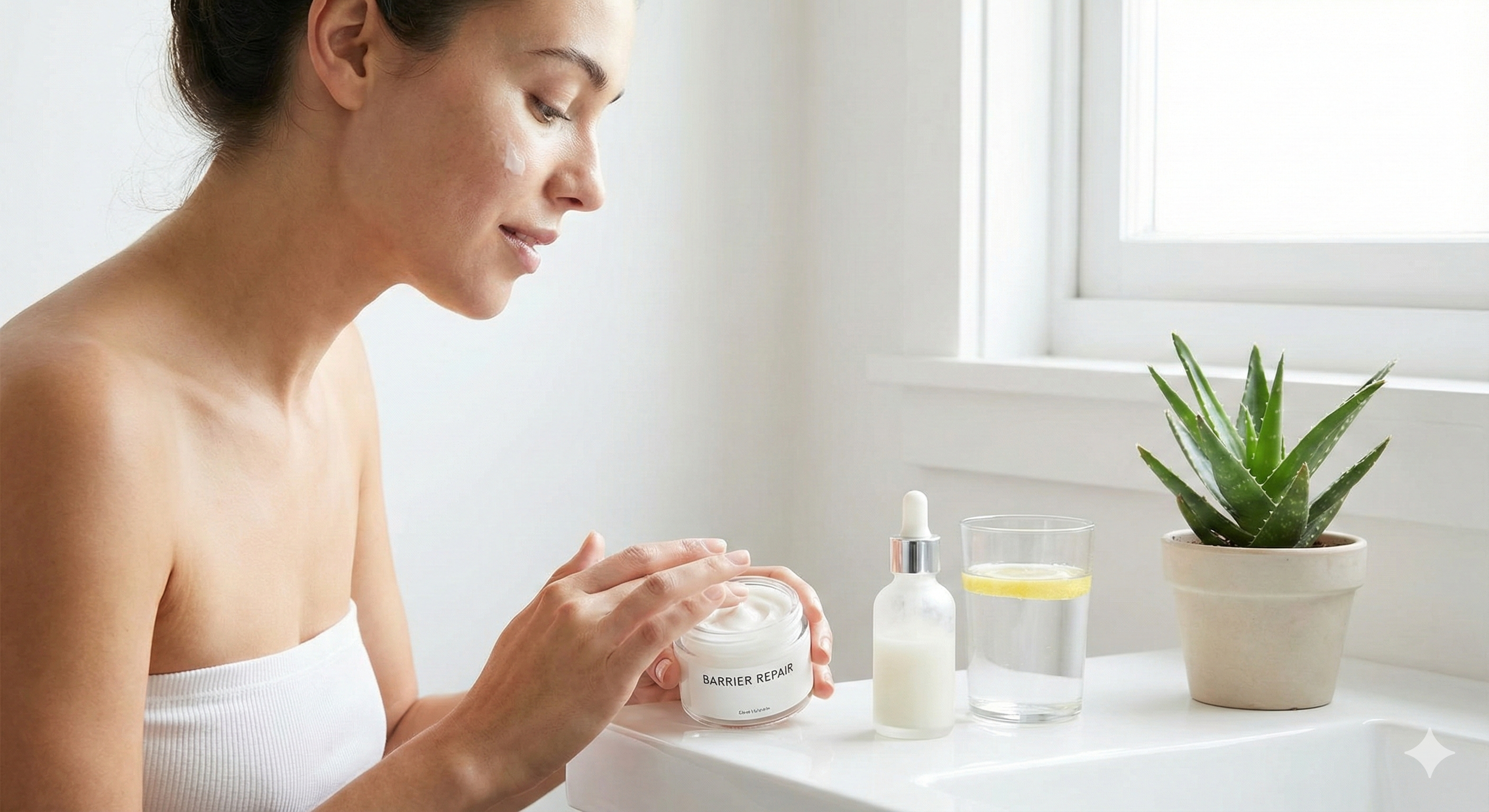
You need to replace that "mortar" we talked about. You want a thick, nourishing moisturizer.
Key Ingredients: Look for Ceramides, Niacinamide, and Squalane. These mimic the natural oils your skin is missing.
Enabling Next-Gen Applications
Technologies like smart cities, industrial automation, and immersive experiences (AR/VR) rely on edge computing to function seamlessly.
The Bottom Line
Ideally, skincare should be self-care, not a chore. By stripping back your routine and focusing on barrier health, you’re setting the foundation for makeup that sits better and skin that looks great even when you're bare-faced.
For the better part of a decade, the beauty industry has sold us on the idea of "resurfacing." We have been told to peel, scrub, laser, and needle our way to better skin. While these modalities have their place, the daily assault on our skin has led to a silent epidemic of chronic inflammation.When you focus on Barrier Health, you stop fighting your skin and start supporting its natural ability to heal, hydrate, and protect itself.I. The Anatomy of a Healthy BarrierTo understand how to fix your skin, you must understand how it functions. The Stratum Corneum (the outermost layer of the epidermis) is not just dead tissue; it is a biologically active shield.1. The Brick and Mortar ModelThe Bricks (Corneocytes): These are protein-rich cells that provide structure. When they are plump with water, your skin looks smooth. When they are dehydrated, your skin looks rough and dull.The Mortar (Lipid Matrix):
This is the glue holding the cells together. It is composed of a specific "Golden Ratio" of lipids:50% Ceramides25% Cholesterol15% Free Fatty AcidsWhen this ratio is disrupted by harsh soaps or acids, the mortar crumbles, and the wall fails.2. The Acid MantleSitting on top of the physical barrier is a fine chemical film called the Acid Mantle. Your skin is naturally acidic (around pH 4.5–5.5). This acidity is crucial because:It inhibits the growth of pathogenic bacteria (like P. acnes).It keeps the structural integrity of the lipids intact.The Danger:
Most foaming cleansers are alkaline (pH 7–9). Using them daily destroys the Acid Mantle, taking hours for the skin to repair.3. The MicrobiomeWe now know that millions of bacteria, fungi, and viruses live on your skin. This "skin flora" educates your immune system and fights off bad bacteria. Over-cleansing creates a "sterile" environment where bad bacteria can actually thrive, leading to perioral dermatitis and acne.II. The Architecture of Damage: How We Broke Our BarriersHow do we know if the barrier is compromised? It is rarely one big event; it is usually "death by a thousand cuts."Trans-Epidermal Water Loss (TEWL):
When the "mortar" is missing, water from the deep layers of your skin evaporates into the air. No matter how much water you drink, your skin remains dehydrated.Inflammaging: Chronic, low-grade inflammation degrades collagen and elastin. Paradoxically, using too many anti-aging acids can accelerate aging by causing this inflammation.The Sensitization Loop: You break out $\rightarrow$ You use harsh acne treatments $\rightarrow$ You damage the barrier $\rightarrow$ Bacteria enters easier $\rightarrow$ You break out more.III. The Restoration Toolkit: Ingredients That HealWhen shopping for products to fix a broken barrier, ignore the marketing claims on the front of the bottle. Turn it around and look for these specific "building blocks" in the ingredient list (INCI).The "Big Three" (The Repairers)Ceramides: Look for Ceramide NP, AP, or EOP. These replace the missing lipids in your cell walls. Phytosphingosine is a precursor that helps your skin create its own ceramides.Fatty Acids: Look for Linoleic Acid, Linolenic Acid, or oils high in them (like Sunflower, Safflower, or Evening Primrose oil).Cholesterol: Often overlooked, but essential for the structure of the lipid layer.The Soothers (The Firefighters)Panthenol (Vitamin B5): A humectant that also reduces itching and inflammation.Allantoin: Extracted from comfrey, it promotes wound healing.Centella Asiatica (Cica/Tiger Grass): A powerhouse antioxidant that speeds up healing and reduces redness significantly.Oats (Colloidal Oatmeal): Contains beta-glucans which reduce histamine responses (itching) in the skin.
The Hydrators (The Water Magnets)Glycerin: The gold standard. It is arguably more effective than Hyaluronic Acid for barrier repair because it is smaller and penetrates deeper.Urea: A unique ingredient that hydrates and gently exfoliates without stripping. It is a natural part of your skin's moisturizing factor (NMF).IV. The Lifestyle FactorYou cannot fix your skin barrier solely from the outside if you are destroying it from the inside.Lipid Intake: Your skin needs raw materials to build oil. If you are on a very low-fat diet, your skin will suffer. Incorporate Omega-3 fatty acids (salmon, walnuts, flaxseed) to keep cell membranes fluid and flexible.Cortisol Management: Stress spikes cortisol, which increases oil production but decreases the skin's ability to hold water and heal. This is why we get "stress breakouts."Temperature Control: Hot water melts skin lipids. Wash your face (and body) with lukewarm water only.V. The Timeline:
Managing ExpectationsPatience is the hardest ingredient to find.Days 1–3: Skin feels calmer and less tight. Stinging upon application stops.Days 7–14: Flakiness subsides. Redness begins to fade. "Dehydration lines" plump up.Days 28–40: This is one full skin cycle. By this point, the damaged cells have shed, and new, healthy cells—protected by your new routine—have reached the surface. This is where the true "Glow" appears.The Golden Rule: When in doubt, do less.
Your skin knows how to heal itself; your job is simply to clear the way.Next StepSince this text covers a lot of ingredients, would you like me to create a "Cheat Sheet" table comparing Humectants vs. Emollients vs. Occlusives so you know exactly which layering step does what?
Leave a comment
Join the Conversation
We’d love to hear your thoughts! Share your ideas, questions, or feedback in the comments below.
Be respectful, stay on topic, and let’s build a community where tech enthusiasts can learn and grow together.
Leave a comment and join the discussion.